
"Nowruz" A Civilized Protest Against the Destruction & Absurd Wars
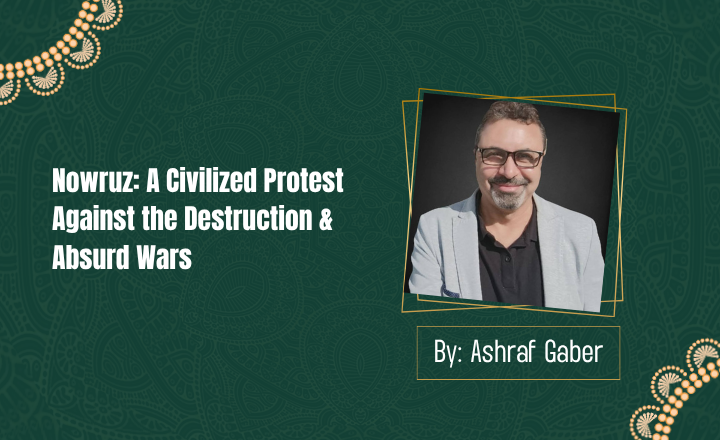

By Ashraf Gaber
Yesterday afternoon, I sent a WhatsApp message to the Turkish Ambassador in Cairo, His Excellency Salih Mutlu Şen, inquiring whether the embassy’s celebrations of Nowruz, to which I had been graciously invited, would proceed as scheduled or be canceled like some other events due to weather advisories. The Ambassador replied: “Don’t you like today’s weather?” I responded: “On the contrary, I find it wonderful.” He said: “Good, then don’t be late, the program is Packed.”
By evening, the celebration reflected Cairo’s radiant atmosphere after two days of rain, leaving the city refreshed and beautiful. Communities from Turkey, Azerbaijan, Kazakhstan, Uzbekistan, and Kyrgyzstan gathered alongside a diverse Egyptian presence, students of Turkish, academics, business leaders, public figures, and journalists. The event became a joyful carnival, a mosaic of traditional costumes, poetry, local music, and the aromas of distinctive cuisines from each nation. The circle of Nowruz celebrants, of course, extends geographically to other peoples in our region, including Iran, Iraq, and Syria.
In his remarks, Ambassador Salih Mutlu Şen emphasized the human symbolism of this festival, saying:
“Nowruz is not merely a celebration of the arrival of spring; it embodies the spirit of fraternity, unity, and partnership among our peoples. It represents a new beginning toward hope and peace, a bridge connecting our shared history with a future built on cooperation and mutual respect.”
The atmosphere evoked the joy and purity of Egypt’s Sham El-Nessim, which this year falls on April 13. It is one of the oldest human festivals, celebrated continuously for more than 4,700 years. Egyptians mark the arrival of spring in their own way, and our embassies around the world also commemorate it with Egyptian communities and friends of Egypt abroad.
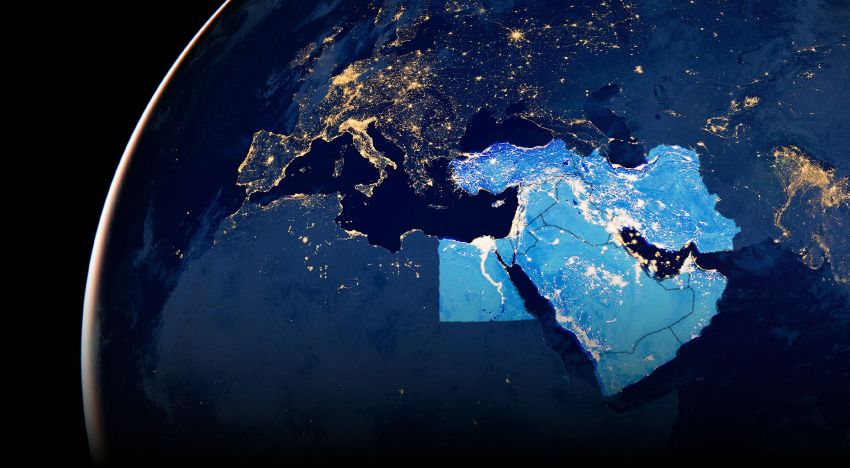
Yet reflection draws us into the stark contradiction between this civilizational heritage of celebrating spring and nature’s beauty, and the bitter geopolitical reality. While nations rejoice in the blossoming of flowers, the Middle East reverberates with explosions, its skies clouded by the smoke of artillery, and its lands scarred by missiles launched aimlessly.
The current absurd military scene, specifically the escalating confrontation between Israel and the United States on one side, and Iran on the other, imposes a destructive zero-sum equation that transcends the boundaries of the warring parties. We are witnessing a regional conflict in which geography is violated, and sparks of fire spread to countries not directly involved. The fallout has reached the UAE, Saudi Arabia, Kuwait, Qatar, Bahrain, Iraq, and Jordan, turning their skies into corridors for stray missiles and drones. What justification makes the security and stability of these nations, and their rising economies, hostage to geopolitical score-settling and military posturing beyond their borders?
This grave harm amounts to a deliberate drain on the resources of peoples who seek their spring in development, technology, and economic prosperity, not in the trenches of proxy wars.
The message of spring will remain the strongest. While the world’s headlines echo with this senseless war, nature reminds us of its power to renew and grow despite everything. Celebrating Nowruz and Sham El-Nessim is, at its core, an alignment with life against annihilation, and a symbolic call for just peace to blossom in our hearts and international relations. May the refinement declared by flowers and music, and the voice of diplomatic reason, prevail, erasing the traces of gunpowder and building bridges of hope unbroken by reckless missiles of politics.
Celebrating spring is not merely a seasonal ritual; it is a symbolic act of resistance against extinction. It is a silent protest against the language of gunfire. Just as the earth blooms after a long winter, international relations can flourish if leaders choose peace, and if they recognize that humanity’s instinct is life, not death, construction, not destruction.
Nowruz is not just a festival; it is a civilizational message to the world that peace is the origin, and war is not destiny.


Comments (0)
No comments yet. Be the first to comment!