
CISMOA Explained: Does It Really Turn Egypt into the Largest U.S. Military Base?

By Ashraf Gaber
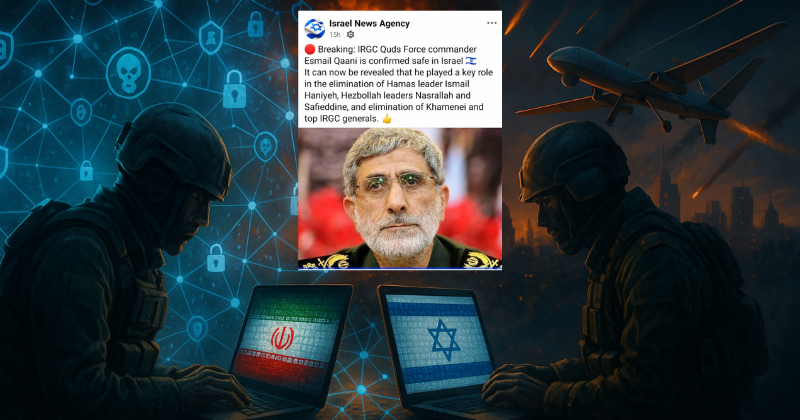
The battle that may prove more consequential than the ongoing exchange of strikes between Israel and the United States on one side and Iran on the other, along with the attacks targeting several Gulf states, is the battle over public awareness. Today, social media platforms have become an open arena for fourth-generation warfare, where rumors spread rapidly and facts are manipulated in attempts to destabilize societies, cast doubt on national principles, and undermine the sovereignty and standing of states.
One of the latest examples is the circulation of video clips promoting misleading claims about the CISMOA agreement signed between Egypt and the United States, alleging that it compromises Egypt’s sovereignty and effectively turns Egyptian territory into a foreign military base.
What Is the CISMOA Agreement?
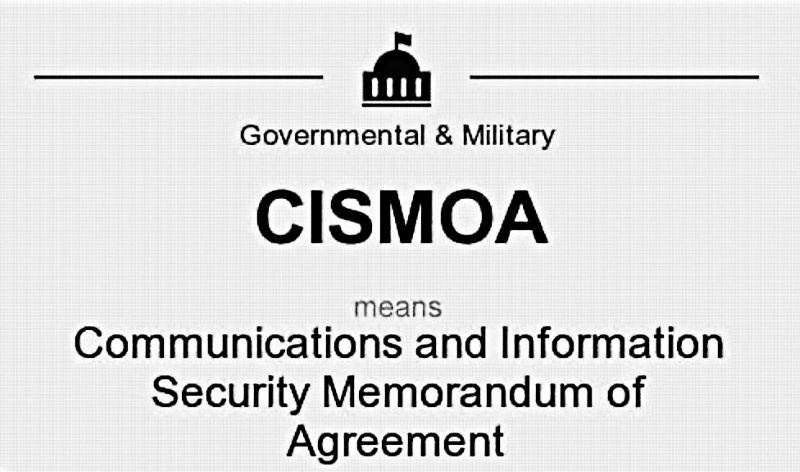
Far from the exaggeration and populist rhetoric often surrounding the issue, the Communications Interoperability and Security Memorandum of Agreement (CISMOA) is essentially a technical and security framework, not a political treaty or an offensive military alliance.
For many years, Egypt’s military arsenal had limited access to the highest tiers of U.S. defense technology, particularly encrypted communications systems, advanced Command, Control, Communications, Computers, Intelligence, Surveillance and Reconnaissance (C4ISR) networks, and precision-guided munitions. The reason was not necessarily political, but largely legal. U.S. federal law prohibits the export of such sensitive technologies to allied countries unless a formal legal framework exists to ensure that these systems are protected from leakage or reverse engineering by third parties.
The signing of the agreement in early 2018 therefore represented a pragmatic strategic decision by the Egyptian government. Its primary objective was to enhance the combat and technical capabilities of the Egyptian Armed Forces and to facilitate the integration of advanced weapons systems in order to keep pace with the evolving demands of modern cyber and network-centric warfare.
Debunking the Claims: End-User Monitoring and Sovereignty
Those promoting such rumors often rely on confusing specialized military terminology while exploiting the general public’s limited familiarity with technical defense concepts. The claim that the agreement grants Washington the right to transform Egypt into a U.S. military base is simply unfounded. The reality revolves around a standard clause internationally known as “End-User Monitoring.”
This clause, applied by the United States to all its defense partners without exception, allows American technical teams to conduct periodic inspections of sensitive equipment sold abroad. The purpose is to verify that the equipment remains in the possession of the purchasing military and has not been transferred to third parties. Such inspections are a routine protocol designed to protect military intellectual property, and they have nothing to do with the management of military bases or the exercise of sovereignty over them.
Similarly, the claim that the agreement enables the use of Egyptian territory as a launching platform for regional conflicts ignores the fundamentals of international law. CISMOA contains no provisions related to basing agreements or mutual defense commitments. Decisions regarding the use of national airspace or logistical facilities remain entirely sovereign decisions taken by the Egyptian state in accordance with its national security interests, and they cannot be imposed through technical memorandums of understanding.
The Real Battle: Information and Awareness
Addressing and dismantling such misinformation is not about defending a particular agreement. Rather, it is about safeguarding the collective awareness of society against attempts at manipulation and polarization.
In today’s strategic environment, military partnerships and defense cooperation are built on mutual interests and balanced relationships, while modernizing a country’s defense capabilities sometimes requires navigating complex technical and legal frameworks.
In the broader battle for public awareness, access to verified information and a deeper understanding of geopolitical terminology remain the first line of defense against the growing tide of misinformation and fabricated narratives.


Comments (0)
No comments yet. Be the first to comment!